When Gallons of Car Paint Meet '70s IKEA Cabinetry, You Get High-Shine Perfection
ByKristen Flanagan,Photography byYoshihiro Makino,Styling byRandi Brookman Harris
PublishedFeb 18, 2023 1:00 AM EST
We may earn revenue from the products available on this page and participate in affiliate programs.
Domino Reno: Before + Afters, DIYs, and Advice From the Pros
Subscribe now to get our newsletter in your inbox.
By signing up, you confirm you are 16+, will receive newsletters and promotional content and agree to ourTerms of Useand acknowledge the data practices in ourPrivacy Policy. You may unsubscribe at any time.
OK so here's the backstory: More than a decade ago, Emily Ward—half of the design duo Pierce & Ward—and her partner, actor Giovanni Ribisi, snagged Japanese ceramic artist Mineo Mizuno's mid-century gem in L.A.'s Atwater Village. But they didn't live there—the two-bedroom house with its own kiln and gallery space became an epic office and studio for Ribisi. That is, until last year. Ready to downsize, Ward pitched turning it into a cozy retreat for them and their twins, Maude and Enzo. "It's such an interesting juxtaposition to the way that Louisa [Pierce] lives and the way that I used to live," Ward says; their Marin County home has a main house, bunkhouse, and guesthouse. "For some reason, it's more inspiring to me not to have so much stuff and all of those extra rooms."
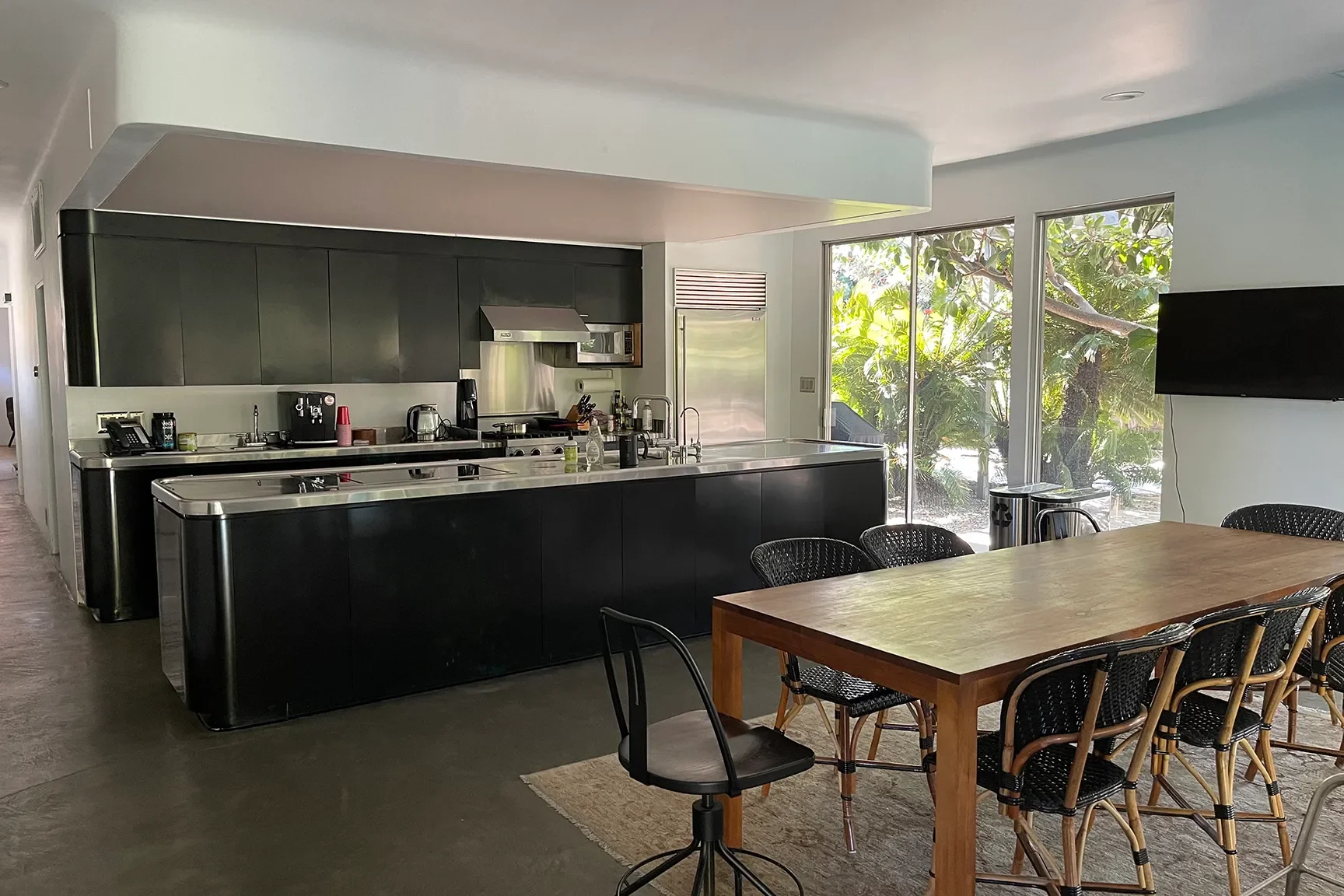
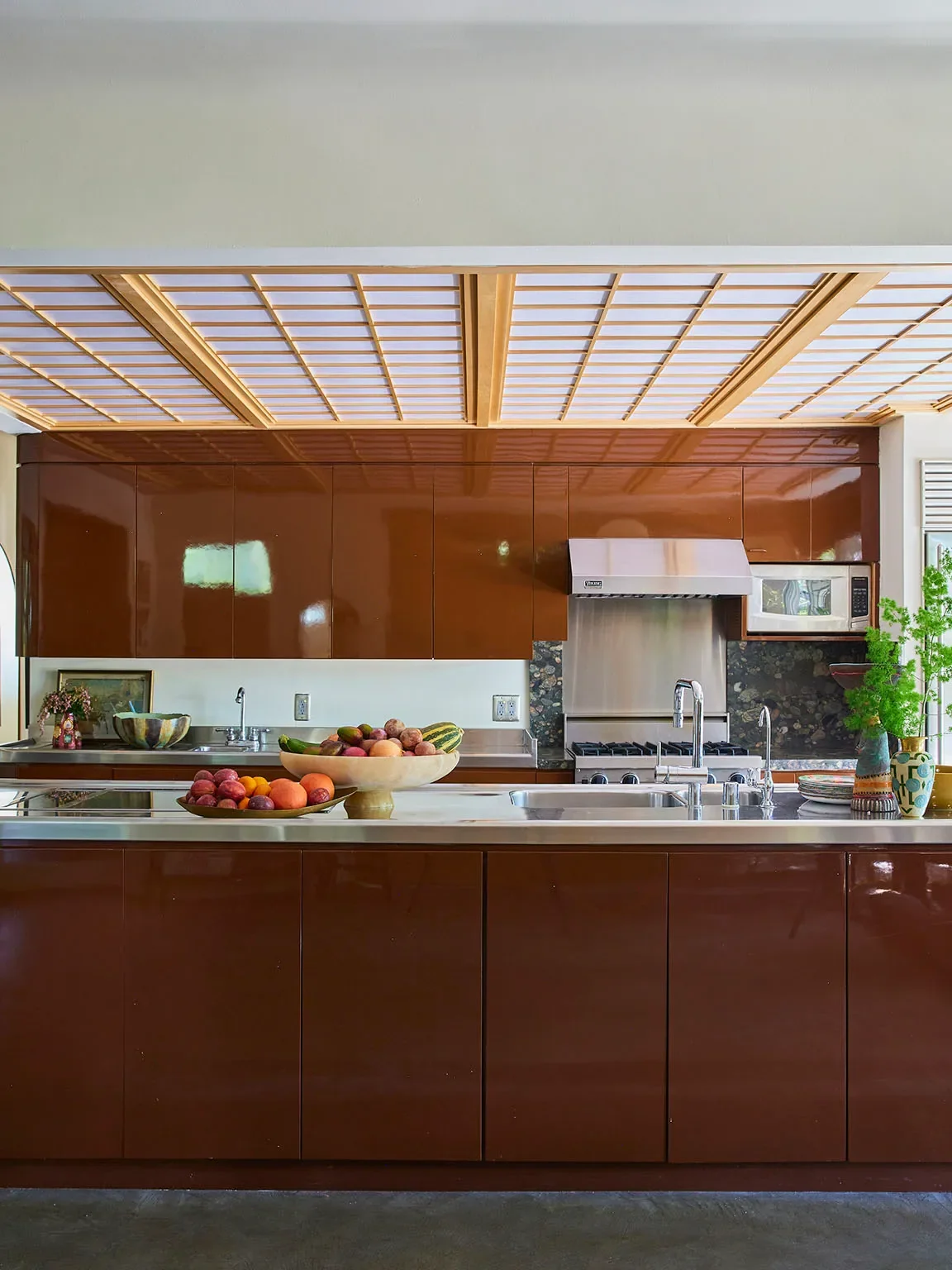
You'd think the kitchen and primary bathroom's existing 1970s IKEA cabinetry would be the first thing to gut, but "when you're designing spaces from scratch all the time, it's really fun to just go with what you've been given," she explains. Plus, it was in amazing condition and the storage was unreal. "The wood inside aged perfectly, and the old European hinges were made so much better than new ones," Ward adds. So she set out to warm up the industrial vibes—concrete floors, stainless steel countertops—without a full gut job. "I decided to lean into what felt organic and Japanese," she says. The result is so stunning that the kitchen made the cover of our collector's Makeover issue (on newsstands now!). Here's how she transformed both spaces with just a few strategic upgrades.
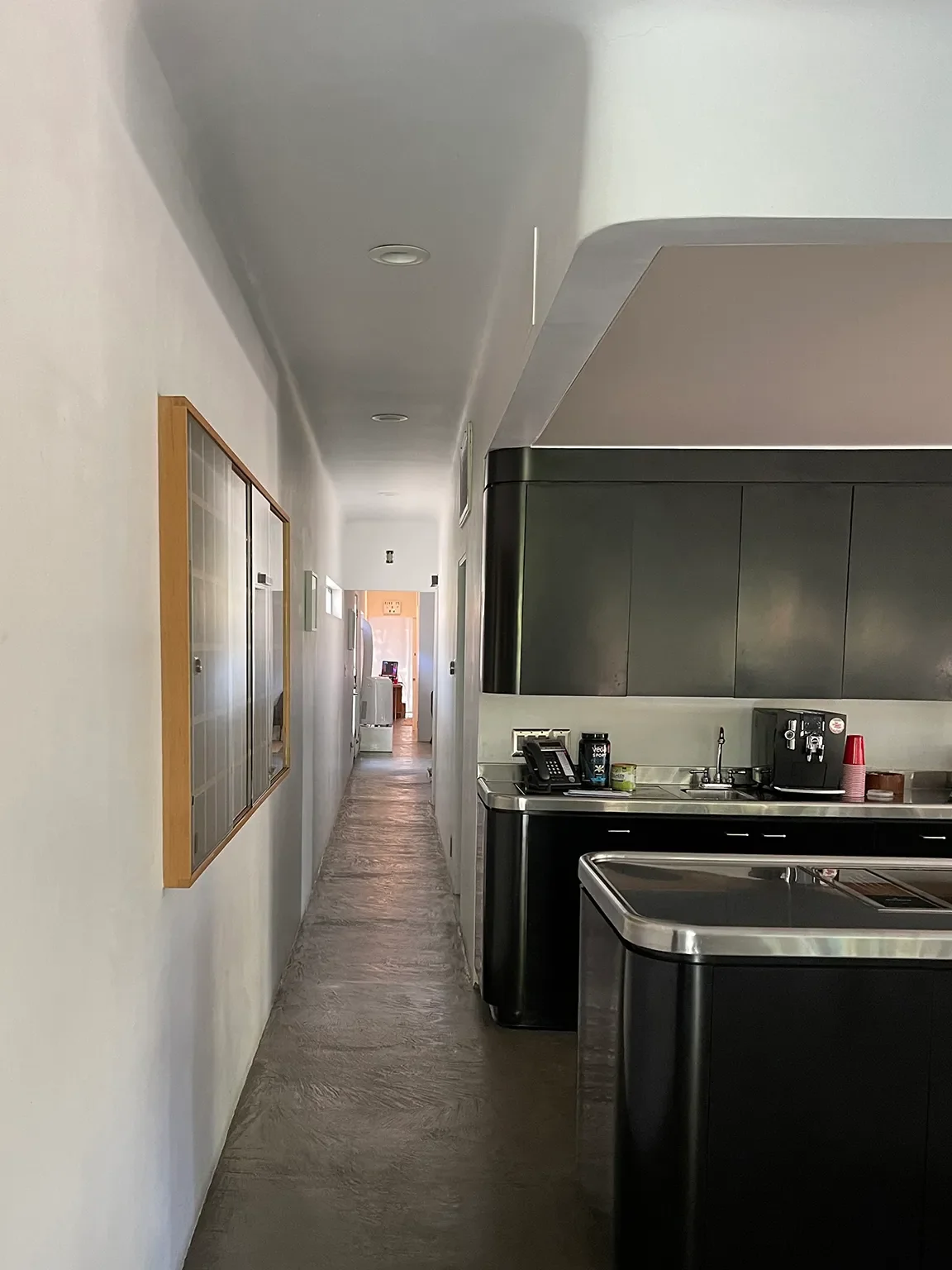
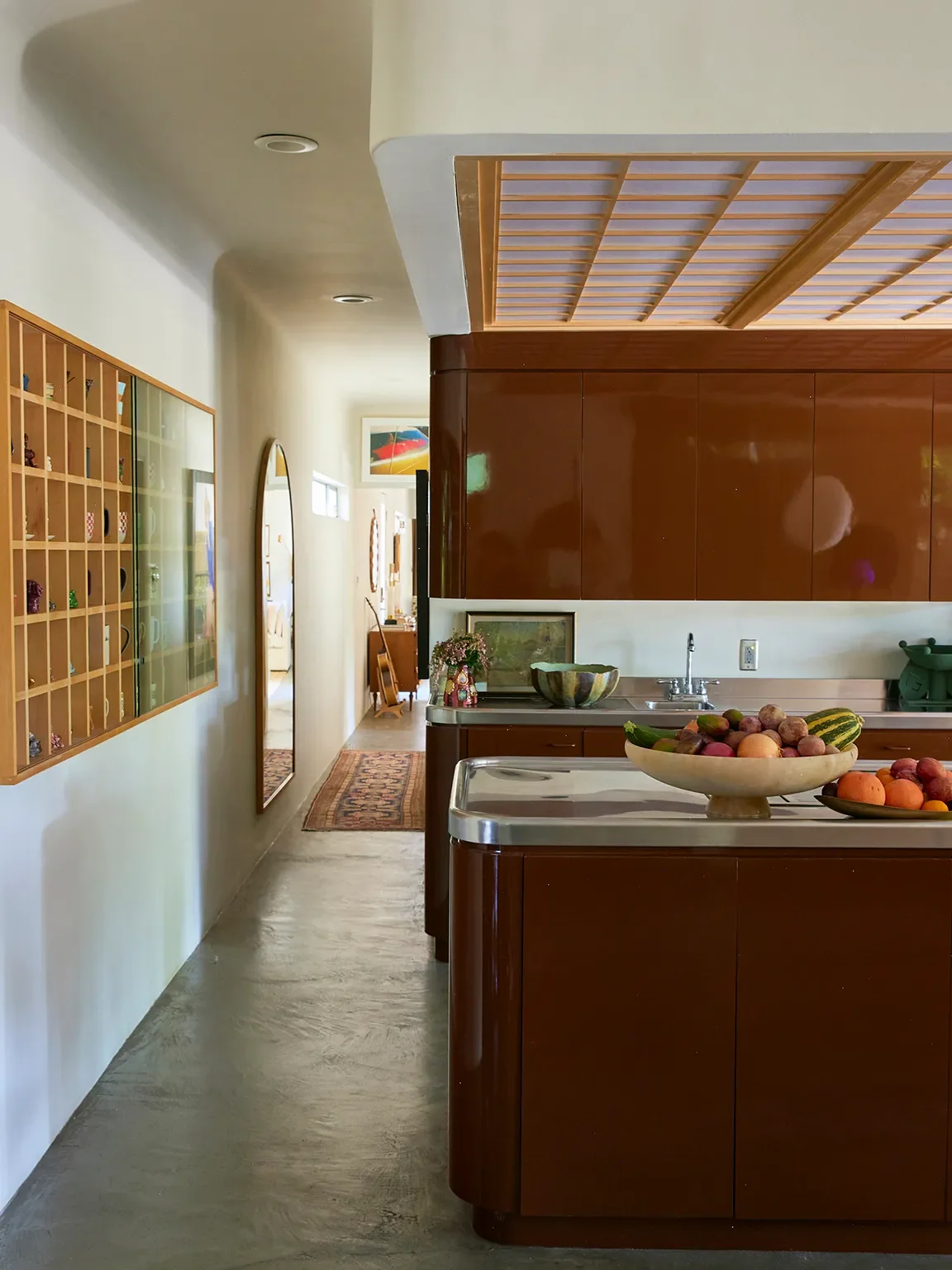
Ward painted the existing black cabinet fronts in Benjamin Moore's Chocolate Candy Brown—but not in just any finish. That insane high-gloss look? You can thank car paint for that. It took several tries to nail the color match, and they had to move out for 30 days while the fumes cleared, "but when you make it work, it's so satisfying," she says. Worth it? Absolutely.
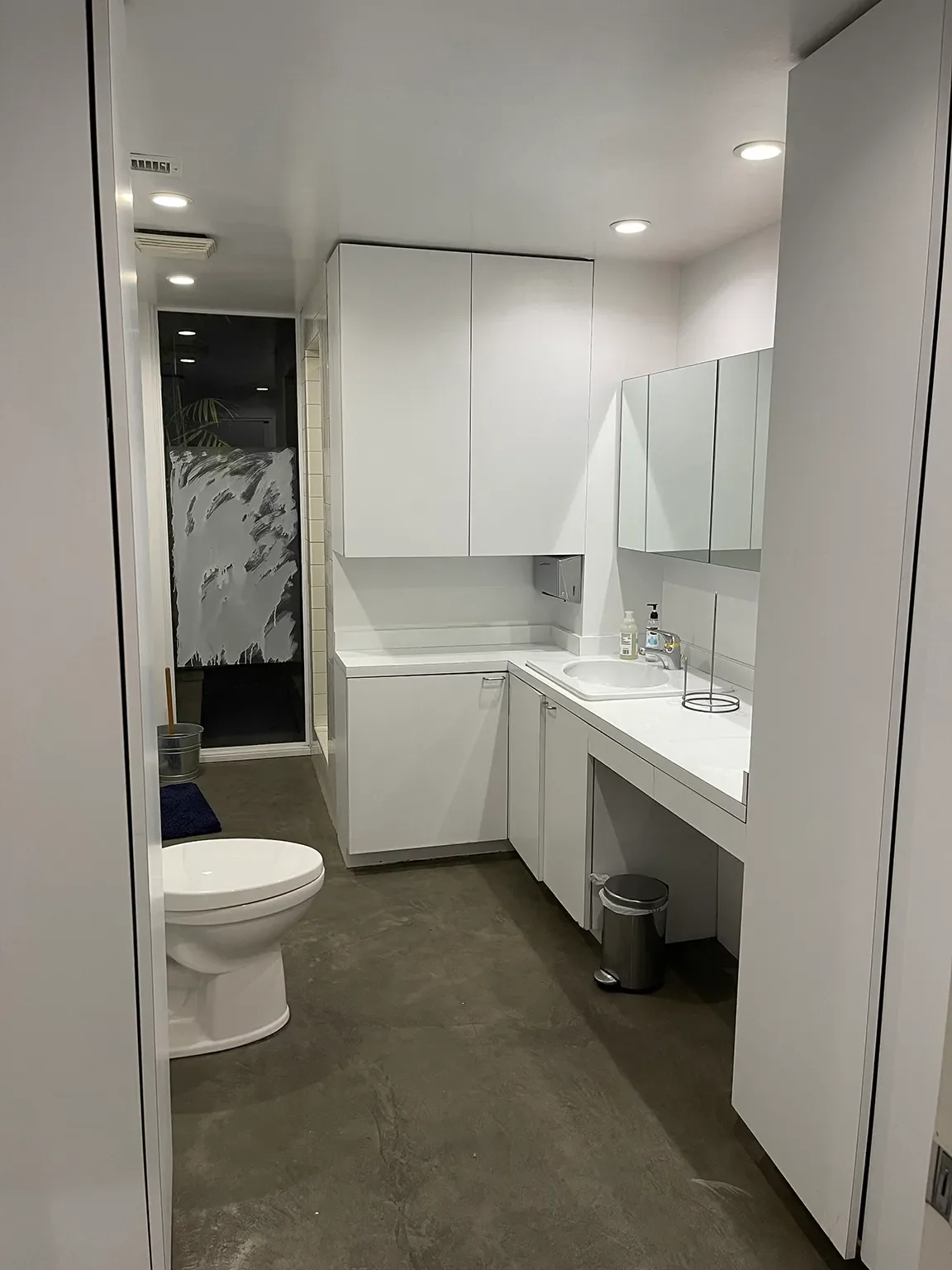
In the bathroom, Ward went full commitment with the same approach—cabinetry and basically every other surface. "I painted everything: the countertops, the sink, everything," Ward says. This time in Benjamin Moore's Southfield Green (the same color as the walls of the Pierce & Ward store, FYI). The refinishing wizards at Miracle Method stuck to their tried-and-true process: clean the surface to remove soap and mineral deposits, apply a bonding agent to prevent cracking and chipping, then lay down the finish—car paint, in this case—using a fine-spray compressor.
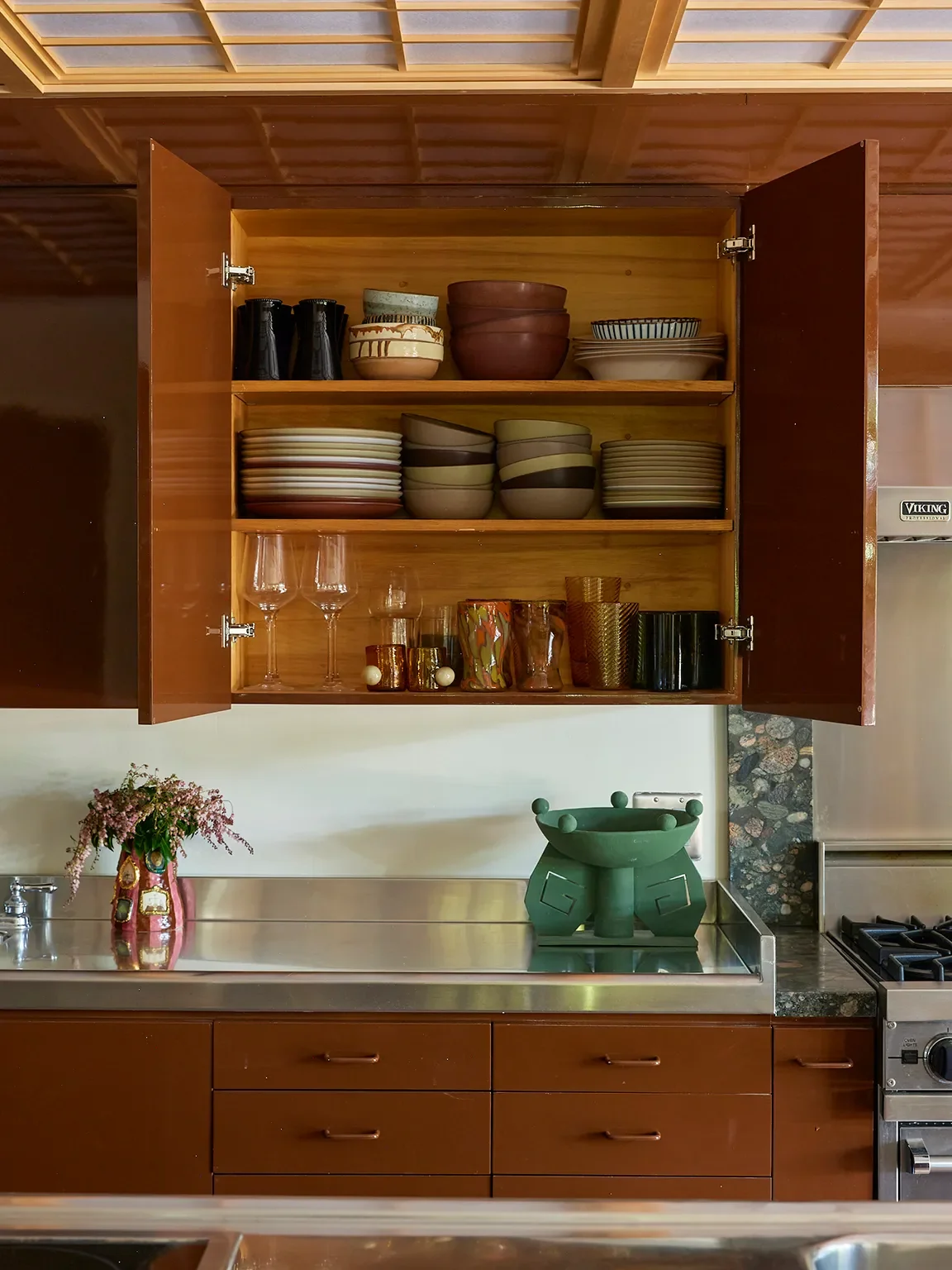
Inspired by kintsugi, the Japanese art of repairing broken pottery with gold, Ward patched the kitchen backsplash behind the stove—"a really cool-looking Formica that was unfortunately broken"—with a slab of pebbly green marble. With the leftovers, she filled the gap in the floor where she'd opened the dining room to the living room. Waste not, want not. Love this mindset.
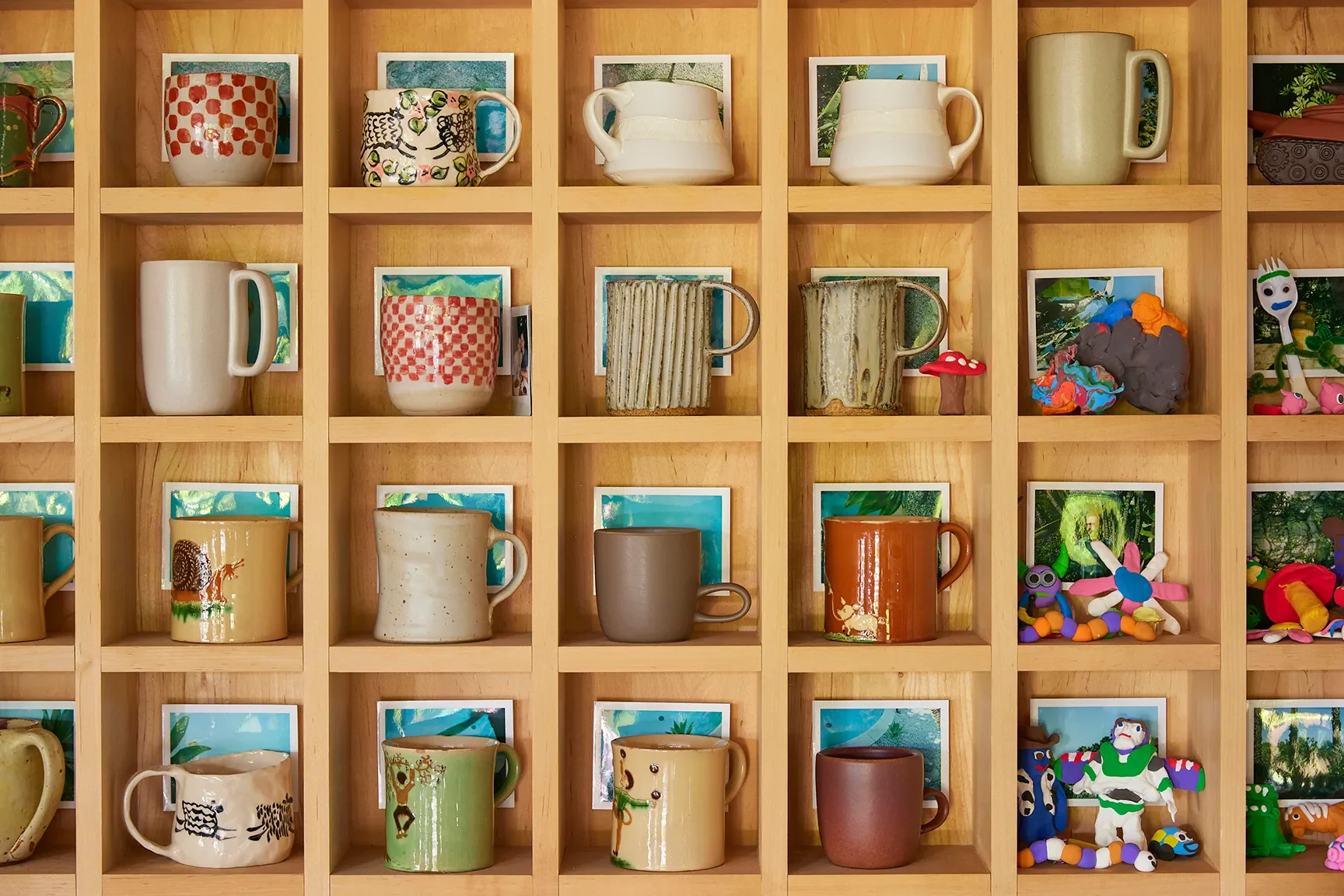
Ward and Ribisi inherited the wall-mounted display case from Mizuno, the previous owner. But while the artist used it for his ceramic tests, Ward repurposed the unique piece for mug storage—84 of them, to be exact. "We drink a lot of coffee," she says with a laugh. Her favorite cup gets the prime spot right in the middle, and she's also given pride of place to ceramics made by Ribisi's mom and their kids. "It was a little bit of an adjustment for me having all closed storage otherwise," Ward admits. "So when I figured out that I could put the mugs in that one display case, it made my life so much better."
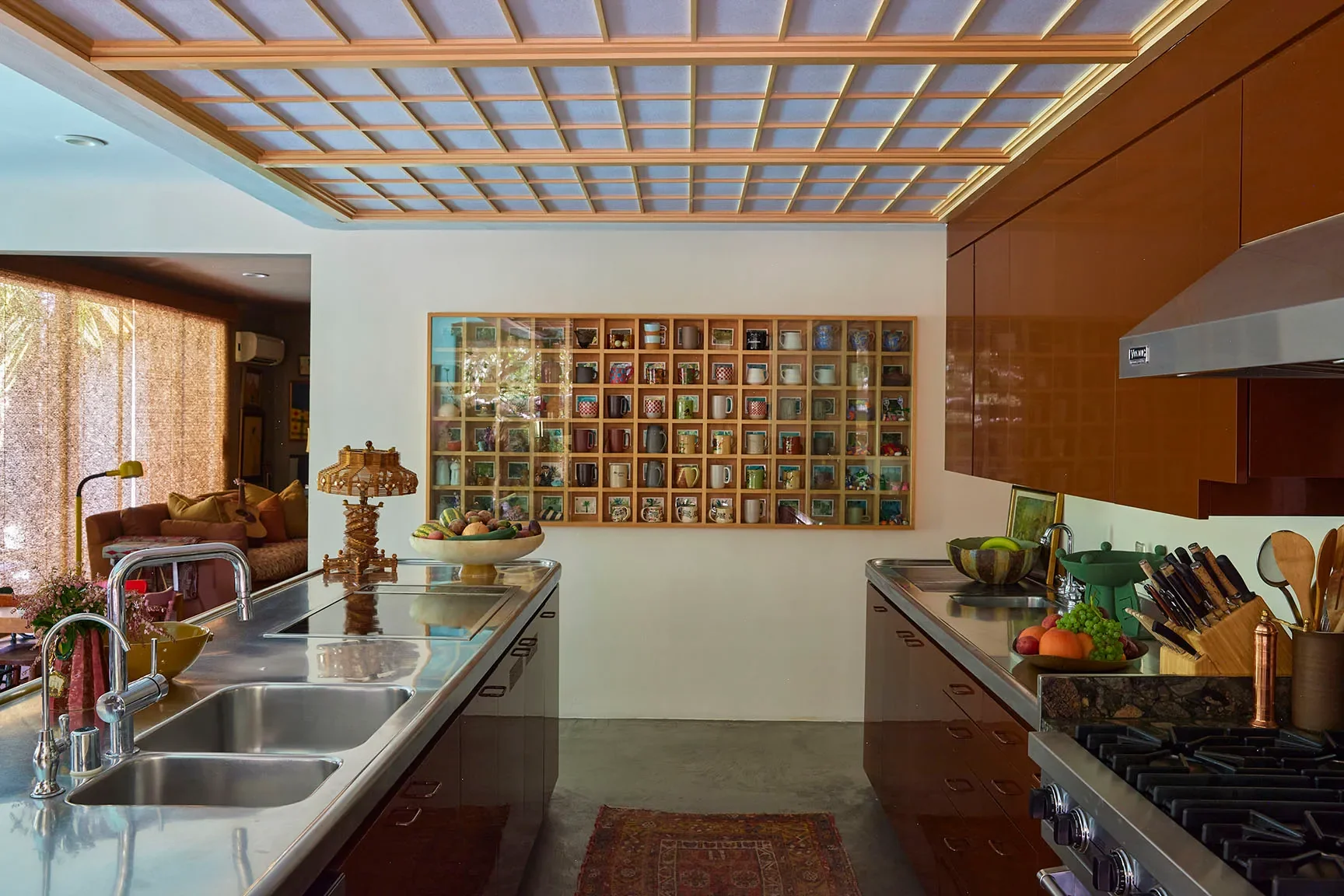
In its past life, the kitchen ceiling was basically a sea of harsh fluorescent office lighting. But just like with the rest of the space's quirks, Ward and Ribisi leaned in instead of ripping out. Custom shoji screens now beautifully diffuse the light—another gorgeous nod to the house's Japanese soul.
Learn more about Domino.comEditorial Standards